It's spring in Canberra. The cherry blossoms have bloomed, and the plum blossoms are in full swing, but it's also windy and cold, despite the sun. These guys come for seed, and to forage in the garden.
Sulphur-Crested Cockatoo:
Crimson Lorikeet (aka Scarlet Rosella, Crimson Rosella, Scarlet Lorikeet):
Most of you know me as the C.M. Simpson that writes - well, some of you know me as the C.M. Simpson that writes - and some of you have never heard of me at all.For those of you who don't care about my writing, but do like seeing what I'm doing with pictures, this blog will feature photographs of birds, insects, arachnids, flowers, as well as locations I find myself visiting and book covers I design. Oh, and there will be art - of a kind.
Showing posts with label crimson rosella. Show all posts
Friday, 15 September 2017
Australian Birds - Cockatoo and Lorikeet
Labels:
Australian bird,
cockatoo,
crimson lorikeet,
crimson rosella,
native bird,
scarlet lorikeet,
scarlet rosella,
sulfur-crested cockatoo,
sulphur-crested cockatoo,
wild bird
Location:
Canberra ACT 2601, Australia
Wednesday, 1 July 2015
Daily Photograph - July 1, 2015: Cold Crimson Rosellas
It was officially 0.2 degrees Celsius when I took these shots at 9:45 this morning. These little guys and gals have been coming to the garden for a few weeks now, and they've finally settled down enough to let me within 10 metres. Today, they looked more than a little cold.
Labels:
Australian birds,
Australian parrots,
C.M. Simpson,
crimson lorikeet,
crimson rosella,
photograph
Location:
Canberra ACT 2601, Australia
Wednesday, 15 April 2015
Daily Photograph, April 14, 2015 - Crimson Rosella (aka Crimson Lorikeet)
Location:
Canberra ACT 2601, Australia
Sunday, 28 September 2014
Sunday Walk Feature - Paths and Byways in the Early Morn
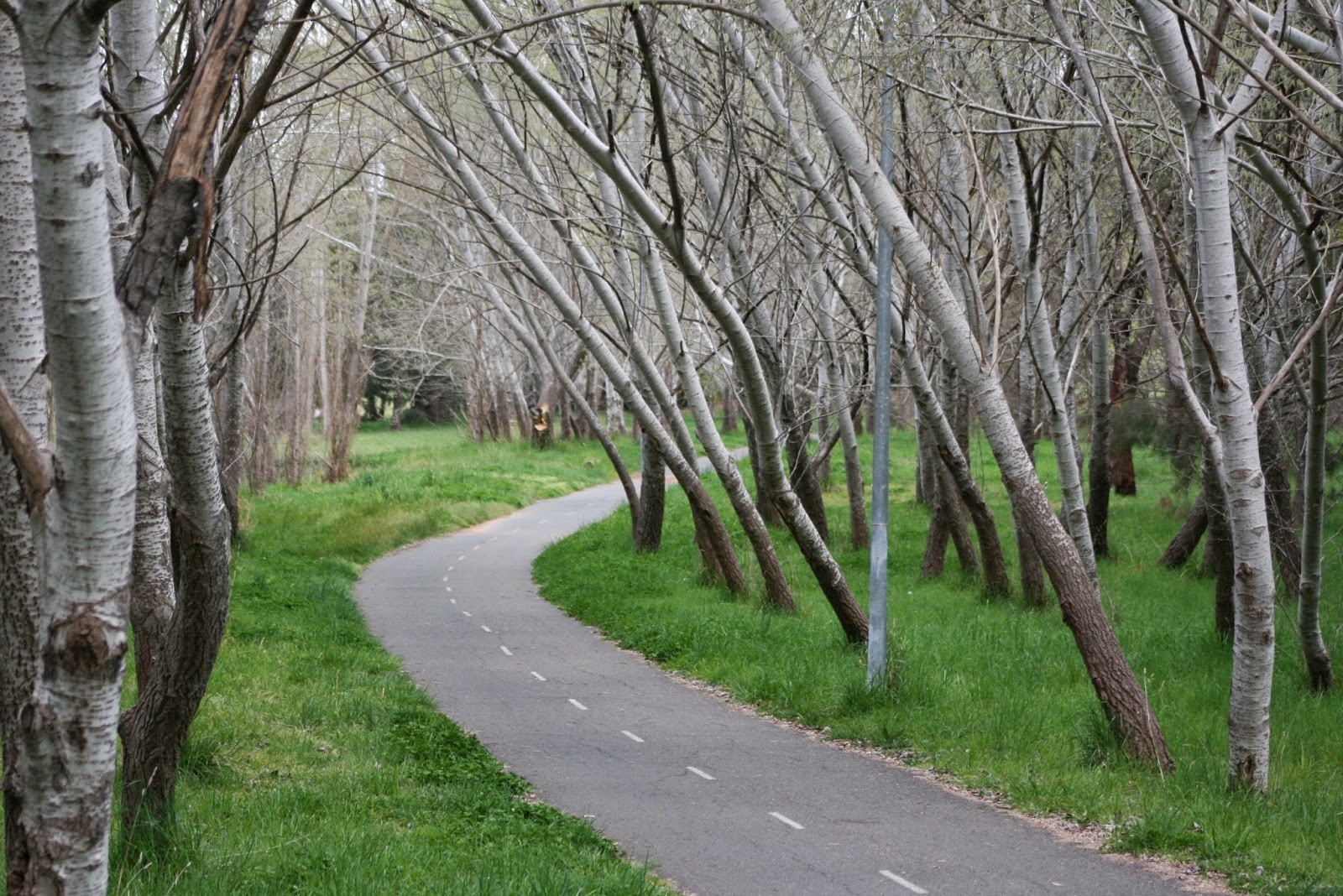
It's hard to fit these walks in, but I'll keep trying. This is taken from one of the walking tracks that criss-cross Canberra at around 06:30 in the morning. I was hoping to catch the local bird-life at breakfast, but that's not quite how it turned out.
The day was overcast, lending atmosphere to the pines overshadowing the path. Spring blossoms lightened the day, even without the morning sun to brighten them.
I like the idea of frames and reflections and look for shots that allow me to experiment with both. Tree trunks and branches can lend some structure, and drains provide urban sources for water reflections.
The first birds I see are these two crimson rosellas, but they're cagey and don't sit still, and I botched most of these shots. This is the clearest of them.
Wildflowers form a muted splash of colour on a dull day. These Ipheon uniflorums look like they've escaped someone's garden. Originally transported to Great Britain from Brazil, they are a native of Argentina, although now naturalised to Great Britain, Australia and New Zealand.
This usually busy road was completely empty, and made me think of abandoned cities and zombie apocalypses.
Bridges were an exercise in horizontals, with the culvert providing contrasting curves... of course, I'm going to have to work on straightening my aim.
Focusing more closely didn't seem to make too much difference, although it did cut out some foreground and side clutter.
With an almost complete absence of birds, paths became the main focus of the day.
This one winds through a small stand of beech trees (possibly Fagus grandifolia... possibly).
No birds, but some unusual tree features, caught my eye.
The path seemed to change as I walked along it, and new shoots announced the arrival of an Australian spring.
The same trees take on a different character in isolation.
The birds started appearing towards the end of the walk. Take a close look - there are two crimson rosellas in this picture.
They remained elusive and uncooperative, but there were still some shots to be had. These superb parrots flew into a tree just as I rounded a corner in the path, but they steadfastly refused to go down to feed while I was there.
The zoom lens was helpful in identifying this species.
I saw this rather sinister-looking bird by the path. It's a white-winged chough (pron. 'chuff'), often confused with crows, ravens or currawongs because of their colouring.
They travel in family groups and, sure enough, this one's family was foraging under a tree not far from the path. (There are four birds in this picture.)
And I couldn't resist the opportunity to use the tree as a partial frame.
or to try to catch the white on their wings, which is only truly apparent when they fly.
Magpies do not like them and these spent a good five minutes swooping the family. (You can seen a chough sheltering under the tree on the right.)
Birds continued to be difficult to photograph. These two Eastern rosellas took off the minute I turned the camera towards them.
Something tells me, I either need more practice taking this kind of shot, or a different piece of equipment. So far, I'm not sure which.
With the birds temporarily gone, I turned to the challenge presented by the nearest pine tree.
I'm not sure what I was looking for, here, but I probably have to some more shoots to work it out.
Just when I gave up on there being any more photographable birds on this shoot, I saw this little fellow, preparing to follow its mate down for a drink from another culvert. To the best of my knowledge, it's a striated pardalot.
None of my attempts at using branches to frame it, seemed to work.
So I took a more classic shot.
Next week, well, next week I'll try a different walk.
Labels:
C.M. Simpson,
chough,
crimson rosella,
Eastern lorikeet,
photographs,
striated pardalot,
Sunday Walk
Location:
Canberra ACT, Australia
Wednesday, 2 April 2014
Australian Birds: Juvenile Crimson Rosellas (Platycercus elegans)
I went through a couple of months where the main birds that visited
my backyard were crimson rosellas. This coincided with the trees
fruiting, so I probably shouldn't be surprised. This pair hadn't yet
exchanged their green 'baby' plumage for the more colourful red and blue
of an adult, and probably wouldn't for another two years. I hope they
stick around so I can see that. I had quite a hard time identifying them
because of it. As you can see, the green is very handy for camouflaging
them against the grass.
The first shot caught them unawares
and caused them a bit of concern,
but they decided food was more important.
Definitely more important.
They
kept eating, but they kept a very good eye on the camera. I stayed just
inside my back door, and they tolerated me photographing them.
When they both bobbed down to collect more to eat, they became very hard to see.
They took one more very assessing look, and then they decided they'd had enough and flew away.
They've been back since, I'm glad to say.
Labels:
Australian birds,
C.M. Simpson,
crimson lorikeet,
crimson rosella,
cross-posted,
photography,
Platycercus elegans
Location:
Canberra ACT 2601, Australia
Wednesday, 26 March 2014
Australian Birds: Adult Crimson Rosellas (Platycercus elegans)
You've seen the juvenile. Now, take a look at these, and you'll
understand why I had so much trouble trying to work out if it was the
same bird or not. This is the adult. Apparently, it takes around
two years for the juveniles to lose their greenish tinge and wear this
red-and-blue coat.
The ones around my house are shy and pretty uncooperative.
If the tree hadn't had so much fruit on it, I doubt he would have stuck around,
but he took a good look at the camera,
and decided the search for food was more important.
Some of those berries can be downright hard to reach,
but well worth the effort.
Labels:
adult birds,
Australian birds,
C.M. Simpson,
crimson lorikeet,
crimson rosella,
cross-post,
photography,
Platycercus elegans
Location:
Canberra ACT 2601, Australia
Subscribe to:
Comments (Atom)